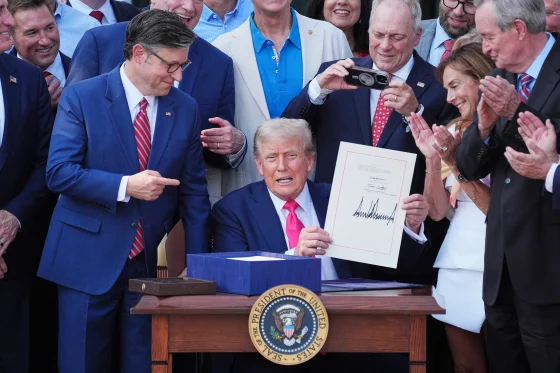
In a highly publicized Fourth of July event, President Donald Trump signed into law a sweeping tax and spending bill dubbed the “One Big Beautiful Bill Act,” marking a significant legislative victory for his administration. The bill, which spans nearly 900 pages, combines a mix of tax reductions and fiscal restructuring that could shape the federal budget and economic landscape for years to come.
At the heart of the legislation is an extension of tax cuts originally passed during Trump’s first term, including provisions that make those cuts permanent. The bill also includes tax exemptions on tips and overtime pay through 2028, an expansion of the child tax credit, and new deductions allowing Americans to write off interest on car loans. Additionally, it significantly raises the cap on the state and local tax (SALT) deduction and introduces “Trump Accounts”—a savings program designed for children’s future education and health care expenses. Despite pressure from some conservative lawmakers, the legislation retains taxes on investment earnings from university endowments.
Beyond taxes, the measure directs substantial new federal spending. It allocates approximately $150 billion to military programs and another $150 billion toward immigration enforcement, including funding for border infrastructure and increased personnel. The bill also tightens eligibility for public benefits, instituting expanded work requirements for Medicaid and food assistance programs. At the same time, it reduces spending on clean energy initiatives and trims parts of the Medicaid program—reversing several provisions of President Biden’s previous domestic agenda.
Trump celebrated the legislation in a patriotic ceremony on the White House lawn, calling it a declaration of “economic freedom” and portraying it as a renewal of American strength and self-reliance. He described the bill as a gift to American workers, parents, and job creators, emphasizing its alignment with traditional conservative priorities.
Critics, however, raised sharp concerns about the bill’s long-term consequences. Former Treasury Secretary Larry Summers warned that the measure could add more than $3 trillion to the national debt over the next decade. Progressive economists and advocacy groups criticized the legislation for favoring the wealthy and corporations while imposing cuts that could harm low-income families and vulnerable communities. They also argued that the rollback of environmental tax credits undermines efforts to combat climate change.
Despite the controversy, the bill passed through Congress largely along party lines and represents one of the most ambitious pieces of economic legislation of Trump’s current term. With the 2024 election behind him and his administration looking to solidify its economic legacy, the passage of this bill signals a clear direction for Trump’s fiscal priorities: low taxes, higher military and immigration spending, and a rollback of social welfare and green energy programs.