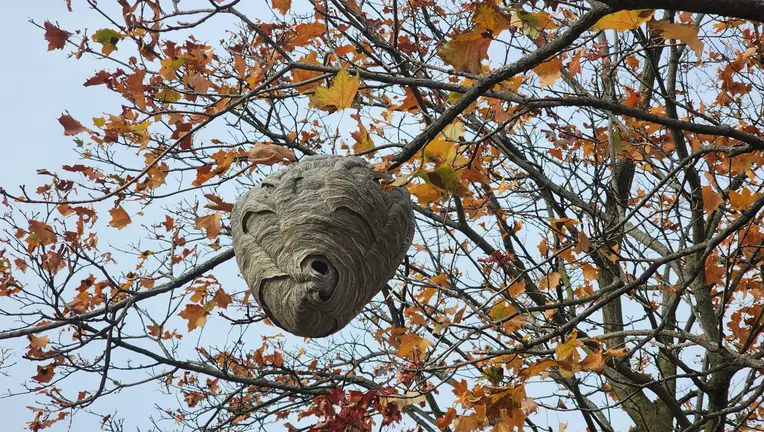
A wasp nest discovered earlier this month at the Savannah River Site in South Carolina tested positive for radioactive contamination, triggering safety protocols at the former Cold War-era nuclear weapons facility. Radiation monitors detected levels on the nest that were about ten times higher than the limits set by federal safety guidelines. The contamination was found on a metal post near tanks containing liquid nuclear waste. Officials emphasized that there was no breach in the storage tanks and that the radiation was isolated to the nest itself.
The Savannah River Site, which played a key role in producing plutonium and tritium for the U.S. nuclear arsenal, still houses large volumes of radioactive waste from past operations. The Department of Energy believes the nest likely became contaminated from residual radioactive material in the surrounding area, rather than from any current leak or structural failure. The nest was safely removed, treated with insecticide, and disposed of following radiological waste handling procedures.
Although the incident did not pose a risk to workers or the public, watchdog groups have raised concerns about wildlife unintentionally transporting radioactive materials. Environmental advocates, including the group Savannah River Site Watch, are urging further analysis of the nest’s composition to determine whether it was built with contaminated soil or other materials near the tanks. The discovery has reignited calls for increased transparency and continued oversight at aging nuclear facilities, where long-term environmental risks still persist despite ongoing cleanup efforts.