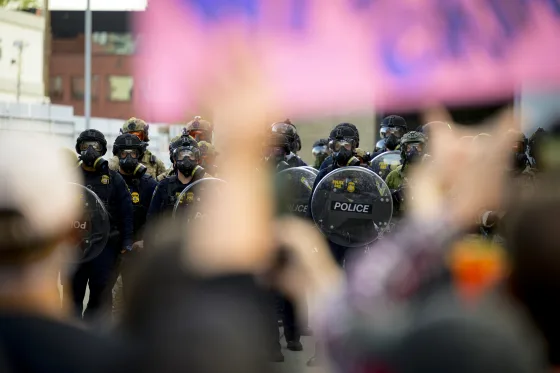
The Trump administration is ramping up its use of National Guard forces to quell what it describes as “violent unrest” in major U.S. cities, authorizing the deployment of 300 Illinois National Guard troops to Chicago. The move, aimed at protecting federal officers and property, has reignited tensions between federal and state authorities over the scope of presidential power in domestic law enforcement.
Illinois Governor J.B. Pritzker sharply criticized the decision, saying the White House bypassed state officials and imposed an ultimatum—either deploy the National Guard voluntarily or face federalization. “No one from the administration consulted me or any state leader before making this announcement,” Pritzker said. “This kind of action is un-American and reckless.” Chicago Mayor Brandon Johnson also condemned the move, warning that a military presence would heighten tensions rather than restore peace.
The deployment follows a pattern of aggressive federal involvement in local policing under Trump’s direction. Similar efforts have been launched in cities like Atlanta, Detroit, and St. Louis, where federal agents were sent in following protests and surges in violent crime. Supporters of the move argue that it restores order where local governments have failed, while critics accuse the administration of overreach and election-year theatrics.
In Portland, Oregon, the administration faced an immediate setback. A federal judge temporarily blocked Trump’s plan to send 200 Oregon National Guard troops into the city, ruling that the circumstances did not meet the legal threshold for such an intervention. The court found that the unrest, while serious, did not constitute an “insurrection” that would justify invoking the Insurrection Act.
Undeterred, the administration pivoted by reassigning roughly 200 National Guard members from California to assist federal forces already stationed in Portland. Pentagon officials confirmed the redeployment, framing it as a “support mission” for existing federal operations rather than a full-scale military intervention.
The disputes in Chicago and Portland highlight a growing constitutional confrontation between the Trump administration and state governments. Legal experts note that while the president can federalize National Guard troops under specific circumstances, doing so without state consent risks violating long-standing limits on executive authority. Civil rights groups have also raised concerns about the use of military force against U.S. citizens, warning that such actions could erode trust in both local law enforcement and federal institutions.
As protests, lawsuits, and political rhetoric intensify, the administration’s push to expand military involvement in domestic matters has become one of the most controversial elements of Trump’s second term. For many state and city leaders, the debate isn’t just about law and order—it’s about who gets to define it.