
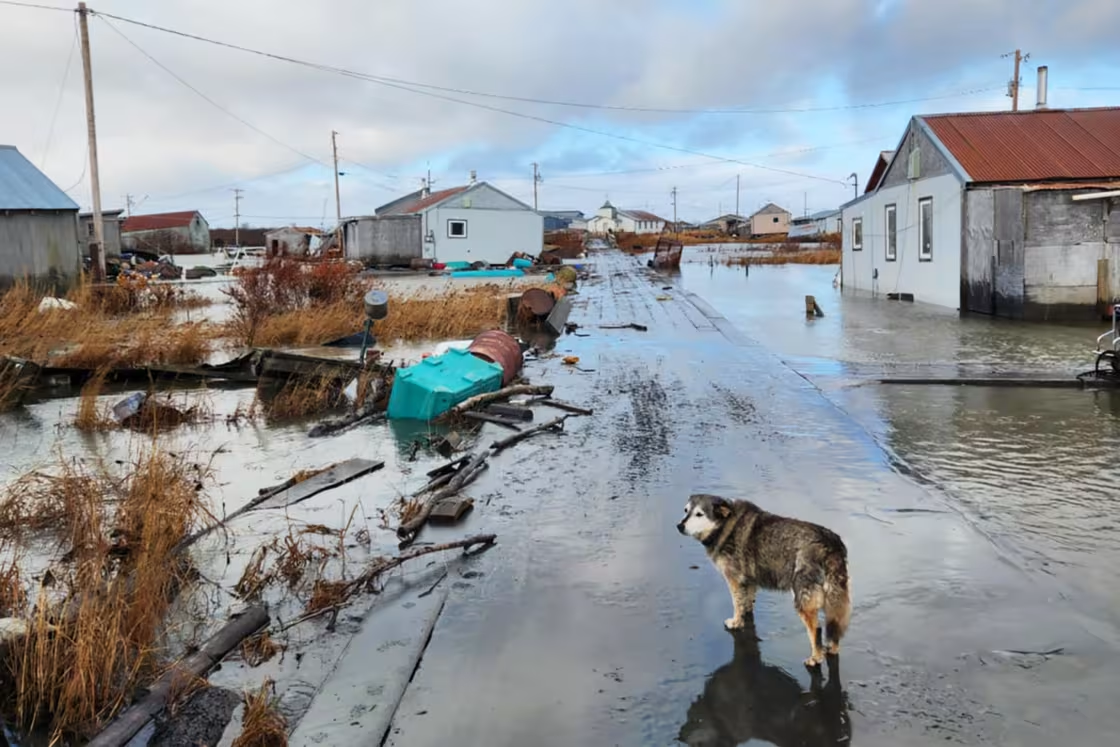
In western Alaska, the remnants of Typhoon Halong have unleashed destructive flooding and powerful storm surges that swept entire homes off their foundations, leaving at least one person dead and multiple others missing.
The hardest-hit communities lie in the Yukon-Kuskokwim Delta, including the villages of Kipnuk and Kwigillingok, where residents scrambled for safety as water levels surged. Officials say some houses were literally carried away by the floodwaters, while others were inundated beyond repair.
Rescue efforts are underway. More than 50 people have been pulled to safety — including some from rooftops — and others were airlifted by the Coast Guard when their homes drifted into open water. Amid the chaos, one woman was confirmed dead, and two others remain unaccounted for.
Many evacuees have found refuge in local schools, which have been transformed into makeshift shelters. In Kwigillingok, roughly 400 people are staying in one building that lacks working toilets. The storm also knocked out power lines, contaminated water supplies, and spoiled stored food — all especially dangerous now that winter is approaching in the remote region.
The area’s geography and isolation are complicating relief efforts. Many of these communities are reachable only by air or water, and damaged infrastructure is making it harder to deliver critical supplies like fuel, food, and medical aid. The onset of winter adds urgency, since harsh conditions could further endanger residents who’ve lost heating and shelter.
Local, state, and federal officials are calling this an unprecedented disaster for the region. Alaska’s congressional delegation has pledged to push for more funding for disaster relief, climate resilience, and infrastructure projects to help rebuild communities battered by storms — noting that the frequency and severity of such events seem to be increasing.