
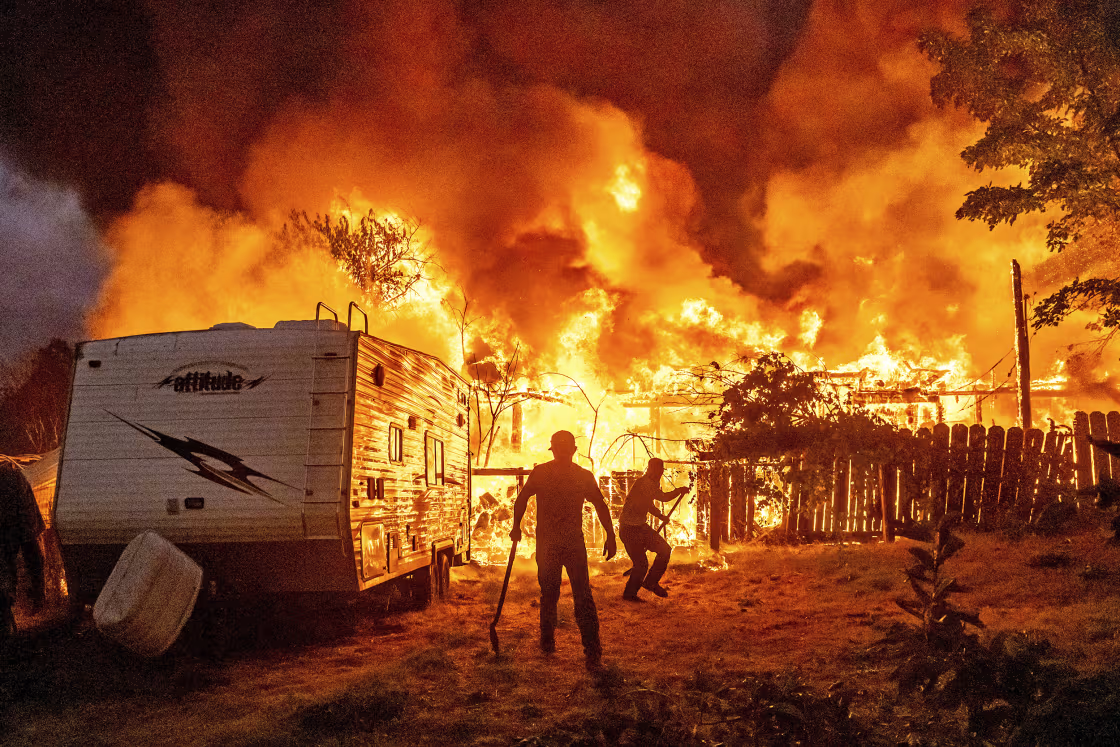
A fast-moving wildfire tore into Chinese Camp, a historic Gold Rush-era community in Tuolumne County, on September 2, 2025, forcing evacuations and destroying multiple homes as firefighters battled to gain control.
What Happened
- The blaze, named the 6-5 Fire, has grown beyond 10 square miles (about 26 km²) with no containment reported as of early Wednesday. It forms part of the wider TCU September Lightning Complex, which has burned more than 19 square miles (roughly 50 km²) across Tuolumne and Calaveras counties.
- Sparked by a series of dry lightning strikes during a late-summer heatwave, the fire spread quickly through parched terrain, fueled by drought and high winds.
Impact on Chinese Camp
- Mandatory evacuations were issued for Chinese Camp and surrounding areas, sending residents to emergency shelters such as the Sonora Senior Center.
- At least five houses were lost, along with an RV, despite neighbors’ desperate efforts to protect properties using shovels, hoses, and sand barriers.
- The broader TCU complex has torched over 9,300 acres, with Chinese Camp alone accounting for nearly 4,000 acres of that destruction.
- Major roads, including stretches of Highway 120, were closed as fire crews worked to contain the advancing flames.
A Town Steeped in History, Now in Peril
- Founded around 1849, Chinese Camp stands as one of California’s few remaining Gold Rush-era settlements and is designated a state historical landmark.
- The town has long been known for its 19th-century structures, including the St. Francis Xavier Church, the oldest surviving church in Tuolumne County.
- Historians and locals are mourning the potential loss of such cultural treasures. As one author put it: “When history burns, it can never be replaced—it’s heartbreaking to lose these connections to the past.”
Fire Conditions & Response
- Cal Fire officials describe the current mix of gusty winds, bone-dry vegetation, and low humidity as creating a “critical fire environment.”
- Crews have deployed bulldozers, engines, and air support to slow the spread, though progress remains limited.
- While lightning sparked the initial flames, years of historic drought have created tinderbox conditions that allowed the fire to grow explosively.