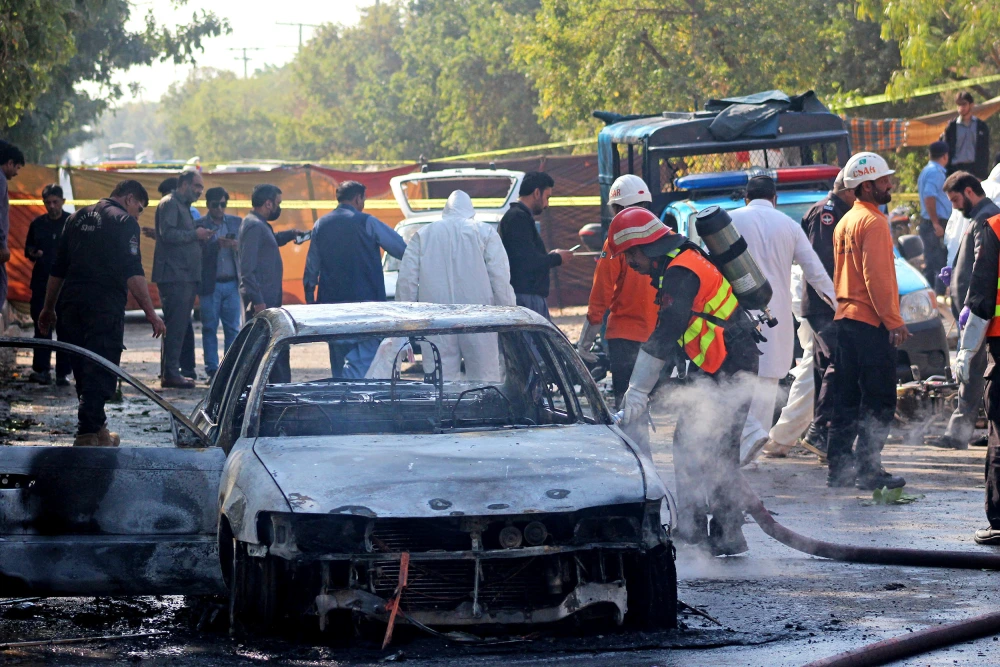
A suicide bomber detonated an explosive device outside the district court complex in Islamabad on November 11, 2025, killing at least 12 people and injuring 27 others, including several police officers and court visitors. The blast occurred near a police vehicle when the attacker, unable to enter the court, carried out the explosion at a busy gate.
Authorities and local officials quickly condemned the incident and began investigations. Pakistan’s Interior Minister Mohsin Naqvi noted that the site was crowded with litigants and security personnel when the explosion struck and identified the attack as a “suicide blast” after a severed head linked to the bomber was recovered. The militant group Tehrik‑e‑Taliban Pakistan (TTP) claimed responsibility, citing retaliation against state courts enforcing “un-Islamic laws.”
The attack has worsened a growing security crisis in Pakistan’s heartland and has raised concerns about regional stability. Pakistani officials accused Afghanistan’s ruling Taliban government and India of complicity, while defense leaders declared that the country was effectively in a “state of war” following recent cross-border violence and militant activity. The bombing also arrived just a day after an attempted assault on a cadet college in Khyber Pakhtunkhwa, underscoring the broader militant threat facing the country.
In response, Islamabad has initiated tight security sweeps, forensic analysis at the scene, and diplomatic outreach to address the broader implications of the attack. The incident’s location—outside a courthouse—marks a notable shift, suggesting militants are increasingly willing to strike core government and judicial infrastructure in the capital, rather than remote or peripheral areas.